When One Note Was Enough — Until It Wasn't
The Nokia 2110, launched in 1994, announced itself with four bars of Francisco Tárrega's Gran Vals — a single melodic line, played by one synthetic voice, through a speaker barely wider than a thumbnail. That was, by definition, a monophonic ringtone: one note at a time, no harmony, no rhythm track, no illusion of an ensemble. For a device whose primary job was making telephone calls, it was sufficient. For a device that was rapidly becoming a fashion object and a personal broadcast system, it was not.
The monophonic era lasted roughly six years. Its defining format was RTTTL — Ring Tone Transfer Language — a Nokia-created plain-text encoding that reduced a melody to a character string short enough to travel by SMS. Elegant, lightweight and entirely capable of reproducing a recognisable tune, RTTTL was nonetheless structurally incapable of harmony. A phone running RTTTL could whistle; it could not play chords. The step change that ended this limitation did not come from a software update or a new compression algorithm. It came from a small rectangle of silicon designed in Hamamatsu, Japan, by Yamaha Corporation.
Key hardware and formats
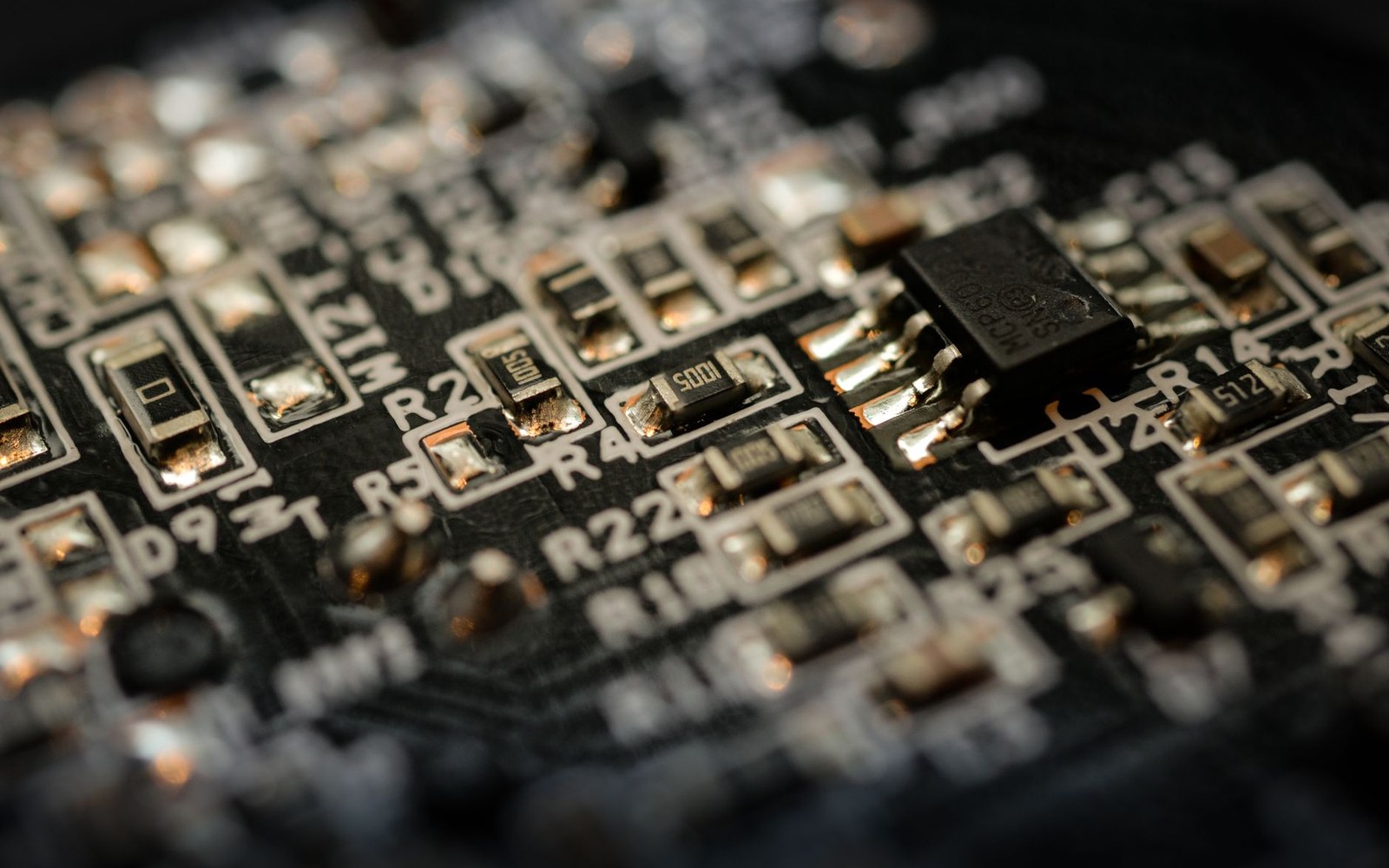
- MA-2 — Yamaha's first mass-market polyphonic mobile audio chip; supported sixteen simultaneous voices; appeared in handsets from around 2000
- MA-3 — Yamaha's follow-on chip; increased voice count and expanded the onboard General MIDI patch set
- SMAF (.mmf) — Synthetic Music Mobile Application Format; Yamaha-developed container optimised for MA-chip playback; dominant format on Japanese i-mode handsets
- RTTTL — Nokia's Ring Tone Transfer Language; monophonic text-string format; structurally incapable of harmony
- General MIDI — 1991 instrument-patch specification ensuring consistent playback across devices; 128 defined patches
The MA-2, the MA-3 and How They Worked
Yamaha had decades of experience encoding musical timbre into chips. Its FM synthesis engines had powered the DX7 synthesiser in the early 1980s and, later, the sound cards that gave personal computers their voices. Miniaturising that expertise for mobile handsets was a different engineering problem — one constrained by milliwatts of power and millimetres of board space — but the underlying logic was the same: generate multiple simultaneous waveforms, assign each a General MIDI instrument patch, mix them and route the result to an output. The General MIDI specification ↗, standardised in 1991, mattered here because it defined 128 instrument patches consistently enough that a ringtone composed on one device would play back recognisably on another.
The MA-2 was Yamaha's first mobile audio chip to reach commercial handsets in volume, appearing in devices from around 2000 onward. It supported sixteen simultaneous polyphonic voices — sixteen independent note streams, each carrying its own pitch, volume envelope and instrument timbre, all mixed in real time. Where a monophonic chip produced a single oscillating signal, the MA-2 produced something closer to a small MIDI sequencer built into the phone's circuit board. The upgrade in perceived audio quality was not subtle: a sixteen-voice rendering of, say, a pop song's hook included bass, rhythm and melody simultaneously, and listeners immediately recognised the difference from the single-line original.
The MA-3 followed and raised the voice count further while improving the quality of the General MIDI patch set it carried internally. Yamaha also developed SMAF — Synthetic Music Mobile Application Format — as the container format optimised for these chips. SMAF files, carrying the extension .mmf, encoded note sequences, instrument assignments, timing and metadata in a structure the MA chips could parse efficiently, minimising the decoding overhead on handsets whose processors were not designed for heavy computation. In Japan, where NTT DoCoMo's i-mode platform had already established a commercial market for downloadable ringtones under the name chaku-melo, SMAF became the dominant delivery format ↗ for polyphonic content almost immediately.
The Handsets That First Carried the Technology
The transition arrived in Japanese handsets first. NTT DoCoMo's 503i series, launched in 2001, included models built around Yamaha's polyphonic hardware, and the commercial infrastructure to sell SMAF ringtones through i-mode was already in place. Consumers who had been paying for simple melody downloads since 1999 found polyphonic versions of the same songs available for roughly comparable prices, and uptake was rapid. Japan had, in this respect, a head start of roughly two years over Western markets — a gap that shaped investment decisions in Europe and North America when those markets began to take polyphonic seriously.
In Europe, the handset that most visibly carried polyphonic capability to a mass audience was the Nokia 3310, released in late 2000, though Nokia's own Composer application on that device remained monophonic. The cleaner polyphonic break came with the Nokia 3330 and, more significantly, the Nokia 6510 and the Nokia 7210, which appeared in 2002 and incorporated Yamaha's chip architecture to deliver four-voice polyphony as a standard feature rather than a premium curiosity. Four voices was not sixteen, but it was enough to render a bassline, a chord and a melody simultaneously — enough to be immediately audible as richer than anything RTTTL had produced. Samsung and Sony Ericsson followed with their own mid-range devices carrying polyphonic capability before the end of 2002, and by 2003 a monophonic ringtone offering on a new mid-range handset was already a competitive disadvantage.
In the United States the rollout lagged slightly, shaped partly by carrier control over handset specifications and partly by the slower adoption of WAP-based download storefronts. Carriers including Verizon and T-Mobile were by 2003 actively promoting polyphonic tones through premium SMS short codes and WAP storefronts, with Jamba — later rebranded as Jamster — and Thumbplay among the distributors selling content formatted for the new chips. The Billboard Hot Ringtones chart, launched in 2004, tracked a market already dominated by polyphonic titles.
Its FM synthesis engines had powered the DX7 synthesiser in the early 1980s and, later, the sound cards that gave personal computers their voices.
The Ceiling Polyphonic Hit, and What Came Next
Polyphonic ringtones had a ceiling of their own. No matter how many voices a Yamaha chip could sustain, the result remained a synthesis — an approximation of music rather than a recording of it. The gap between a sixteen-voice SMAF rendering of a hit single and the actual master recording was audible to anyone who listened carefully, and as mobile networks grew capable of carrying larger files, the commercial pressure to close that gap became overwhelming. The truetone — a segment of the actual master recording, delivered as an MP3 or AMR audio file — rendered the MA chip's voice count largely irrelevant, because the phone's audio playback hardware was doing the work instead. By 2005 and 2006, truetones were outselling polyphonic ringtones in major Western markets ↗, and the Yamaha chips that had defined the intermediate era were no longer the competitive differentiator they had been.
The MA-2 and MA-3 nonetheless represent one of the more consequential pieces of consumer hardware to emerge from the ringtone industry's peak years. They closed a six-year gap between what a phone could play and what a listener might actually want to hear, they established SMAF as a widely used format in Japan and a notable one beyond it and they gave a generation of handset buyers the first credible evidence that a phone could, under the right conditions, sound something like a band.
Chronology
- 1991General MIDI specification standardised
- 1994Nokia 2110 ships with monophonic Nokia tune
- 1999NTT DoCoMo i-mode launches; first paid chaku-melo market begins in Japan
- 2000Yamaha MA-2 begins appearing in commercial handsets
- 2001DoCoMo 503i series brings polyphonic capability to Japanese mass market
- 2002Nokia 7210 and 6510 carry Yamaha polyphonic chips to European mass market
- 2003Polyphonic standard across new mid-range devices globally
- 2004Billboard Hot Ringtones chart launches; US carrier storefronts dominated by polyphonic titles
- 2005–06Truetones overtake polyphonic in major Western markets