Design as Specification
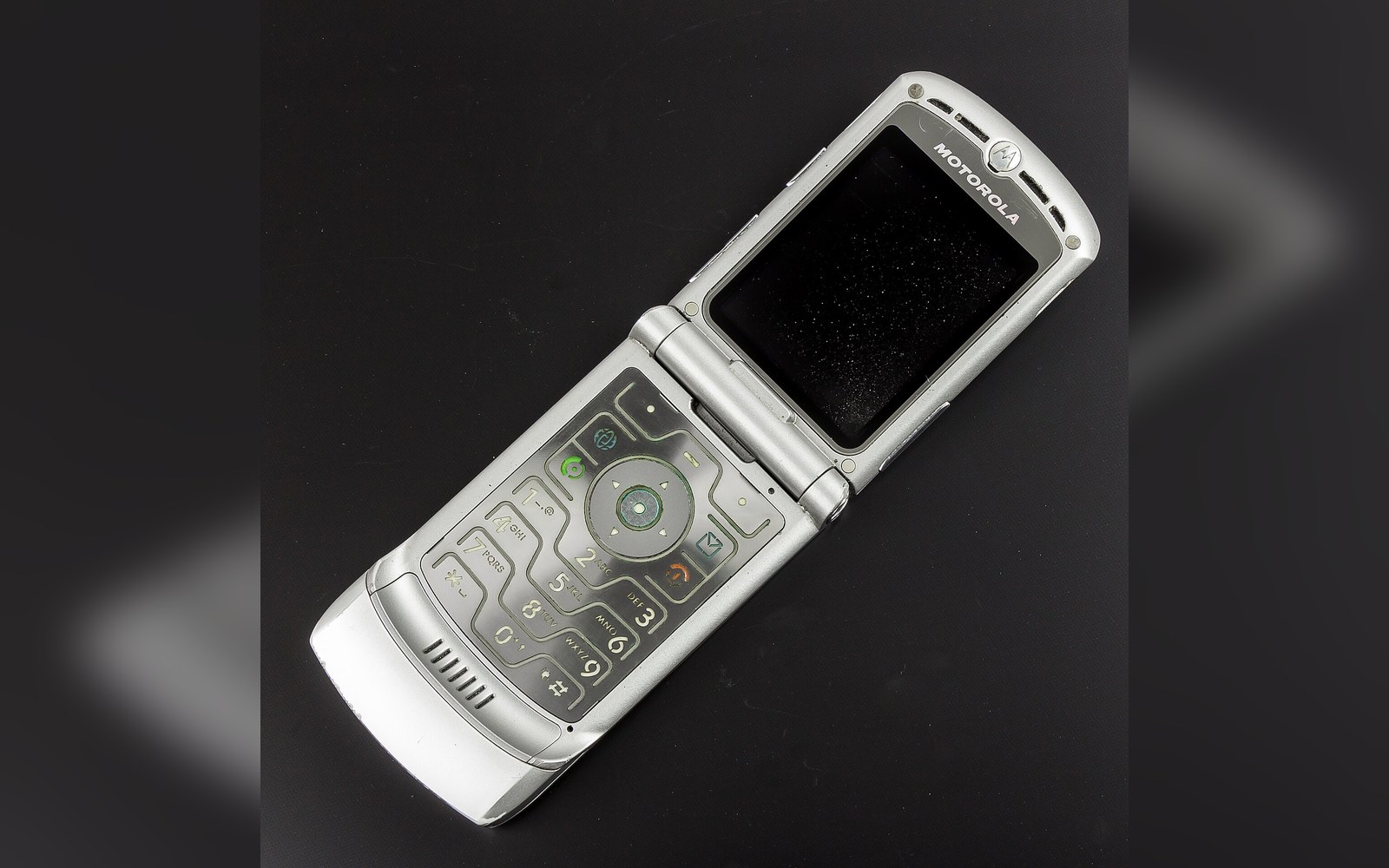
Motorola launched the Razr V3 in the second half of 2004, first through Cingular Wireless in the United States. At 13.9 mm thick, it was the slimmest clamshell handset available at commercial release, machined from a single block of aircraft-grade aluminium with a chemically etched keypad that sat flush against the body. The dimensions were not an afterthought to the electronics; they were the engineering brief. Every internal component — antenna, battery, speaker — had to earn its placement inside a chassis that prioritised silhouette above everything else.
The result was a handset that photographed like jewellery. Motorola understood this and marketed the V3 accordingly, partnering with fashion houses and placing the phone in editorial contexts far outside the technology press. Where Nokia's mid-2000s flagships competed on feature lists, the Razr competed on presence ↗. By the end of its commercial run the V3 had sold over 130 million units across its model family — a figure Motorola reported in 2006 before the line was eventually retired — making it among the best-selling handsets in mobile history at that point.
Key specifications
- Launch year — 2004 (Cingular Wireless, United States)
- Thickness — 13.9 mm at commercial release, thinnest clamshell available at launch
- Material — aircraft-grade aluminium chassis, chemically etched flush keypad
- Audio format support — polyphonic (multi-voice) and truetone (MP3/AMR) capable
- Units sold — over 130 million across the V3 model family, per Motorola's 2006 figures
- Ringtone delivery — WAP browser + premium SMS short code, standard for the era
The Audio Moment It Occupied
The V3 arrived precisely at the fault line between polyphonic and truetone. Its internal speaker delivered polyphonic playback through a chipset capable of handling the multi-voice formats that had become standard after Yamaha's MA-series synthesiser chips reshaped the handset audio industry in the early 2000s. A V3 owner in late 2004 could purchase a polyphonic ringtone — a synthesised, multi-layered approximation of a pop track — through a WAP browser session, charge it to their mobile bill via a premium SMS short code, and have it play back through that slim aluminium body with reasonable fidelity.
But truetones were arriving. A truetone was a segment of the actual master recording, delivered as an MP3 or AMR audio file rather than a synthesised melody, and the commercial infrastructure to sell them through the same premium SMS channels was already in place by the time the V3 went on sale. Jamba — operating as Jamster in the English-speaking markets — and competing aggregators such as Thumbplay were beginning to push full-audio clips. The V3's speaker, constrained by its housing, was not the warmest playback environment for a recorded vocal, but it was sufficient, and the phone's cultural status meant that what played from it was noticed. The ringtone, on a Razr, was on display.
The V3 arrived precisely at the fault line between polyphonic and truetone.
The Phone as Stage
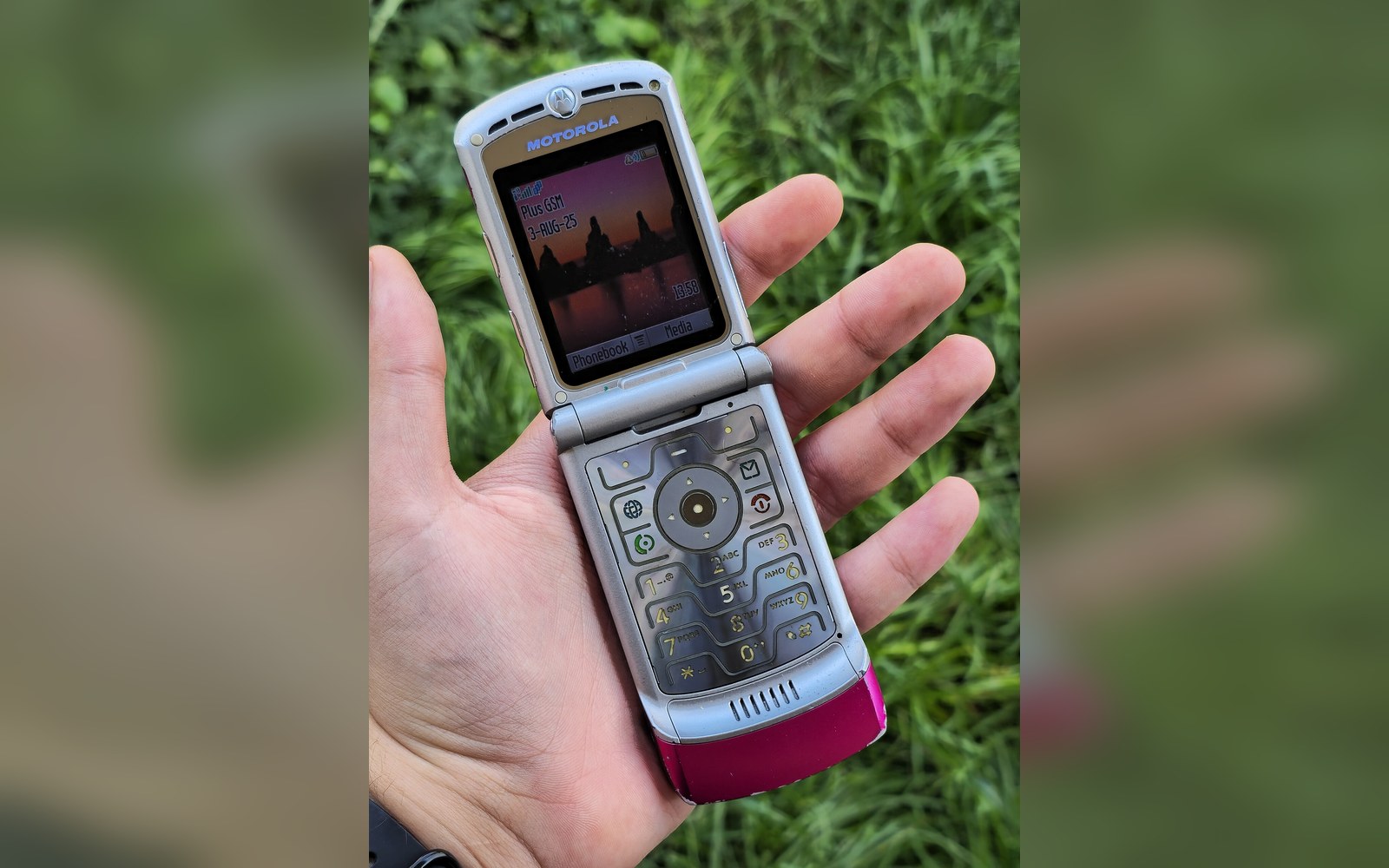
This was the particular dynamic the Razr V3 introduced to the ringtone industry's middle years. Earlier phones had been chosen for their features; ringtones were functional signals. By 2004 and 2005, Billboard's Hot Ringtones chart had given the format its own commercial identity, separate from the underlying track's performance on radio or CD. The phone a consumer carried shaped how that purchase was legible to the people around them. A ringtone playing from a Razr V3 arrived with a visual frame: the flash of aluminium as the clamshell was opened, the backlit keypad, the form that said something before the audio began.
Artists and their labels understood this. Tracks by 50 Cent and T-Pain charted on the Hot Ringtones alongside their radio play, and the demographic buying those tones skewed toward precisely the consumers most likely to be carrying a V3 or aspiring to one. The RIAA formalised its master-tone certification thresholds in 2006, recognising what had been commercially obvious for two years: the truetone was a discrete product, not a promotion, and it sold against a handset landscape in which the device itself carried meaning.
The Razr V3's contribution to that landscape was to make the handset a considered object at the moment the ringtone became a considered purchase. Neither development caused the other. But they coincided, and the coincidence shaped a few years of popular culture with unusual precision — a sliver of aluminium playing four seconds of a master recording, in a pocket that wanted to be seen.
Market moment
- Polyphonic-to-truetone transition — 2003–2005, the window the V3 occupied
- Premium SMS aggregators active at V3's launch — Jamba/Jamster, Thumbplay
- Billboard Hot Ringtones chart launched — 2004, same year as the V3
- RIAA master-tone certification introduced — 2006