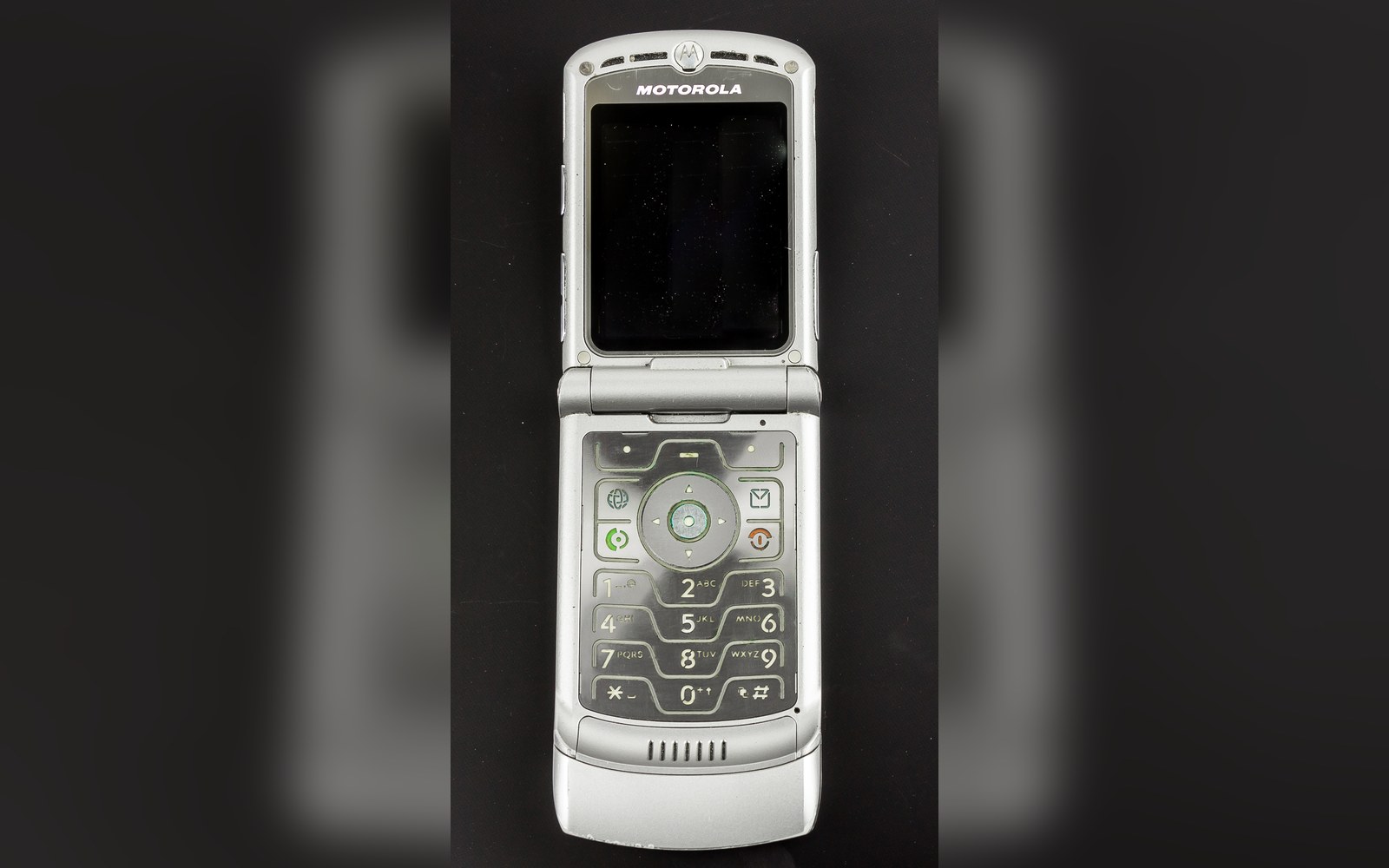
The Whisper That Became a Trademark
When Motorola introduced the "Hello Moto" startup chime in the early 2000s, it was making a calculated argument: that a voice could function as a logo. The phrase — a breathy, slightly theatrical female whisper followed by the brand name — played on boot-up rather than incoming call, distinguishing it from conventional ringtone competition while still colonising the same acoustic territory. It arrived as default audio on a string of Motorola handsets during the period when the company was engineering its most recognisable industrial objects, including the Razr V3, the ultra-thin clamshell that briefly made Motorola the world's most discussed handset maker.
The logic was simple and borrowed from consumer goods branding: Intel had the five-note bong, NBC had the three-note chime, and Nokia had the tune derived from Francisco Tárrega's Gran Vals. Motorola's answer was the human voice — warmer than a synthesised melody, harder to mistake for a competitor's device, and impossible to render in RTTTL notation or any other tone-transfer format. It could not be shared by SMS. It was not a ringtone in the commercial sense; it was a signature sound tied to the boot sequence, and that distinction mattered. No premium SMS short code could sell it; it shipped in firmware or not at all.
That exclusivity was part of the point. In the mid-2000s, carriers and handset makers alike were discovering that default tones shaped brand perception at scale — millions of users never changed their factory settings, which meant the sound a company chose to ship was the sound the public associated with that company. Nokia understood this early. Motorola understood it differently: instead of a melody users might consciously recognise as music, it embedded a voice that operated just below the threshold of deliberate attention.
The "Hello Moto" chime persisted across multiple product lines and several years, surviving handset refreshes and carrier customisations that stripped out many other factory defaults. As the ringtone market measured its own decline after 2007, Motorola's audio identity remained — a reminder that the most durable sounds of the era were never sold at all.
Chronology
- Early 2000s"Hello Moto" chime introduced as a boot-up signature sound on Motorola handsets
- 2004Motorola Razr V3 released; "Hello Moto" among its default audio elements
- Post-2007chime persists across Motorola lines as the paid ringtone market contracts
Brand sound comparisons
- Intel — five-note bong, audio logo used in advertising
- NBC — three-note chime, long-established broadcast identifier
- Nokia — melody derived from Tárrega's Gran Vals, the dominant handset default of the era
- Motorola — spoken voice phrase, boot-up rather than ringtone, firmware-embedded